Skip to content

Falls prevention

Innovative falls prevention solutions for older people in Teignbridge.

Falls are one of the leading causes of injury, loss of independence and hospital admission for older people.

In Teignbridge, rising demand for housing adaptations and limited public funding were putting increasing pressure on local services. Teignbridge District Council, supported by the Design Council and Made Open, set out to explore whether a design-led, preventative approach could reduce falls, improve home safety and lessen reliance on costly reactive interventions.

Falls prevention

The challenge

Falls prevention is a complex, system-wide issue.

Older people fall for many different reasons: reduced mobility, poor home layouts, lack of timely support, fragmented services and limited awareness of risk. Too often, help only arrives after a serious fall has already happened.

With £890,000 spent annually on housing adaptations and demand continuing to rise, the challenge was to:

  • Prevent falls before they occur.
  • Identify gaps across housing, health and social care.
  • Reduce reliance on expensive, reactive interventions.
  • Create solutions that work for older people in real homes.

This was not a problem that could be solved by equipment or leaflets alone.

The challenge

Our approach

We led a user-centred, design-led programme to understand the lived experience of falls and the systems surrounding them.

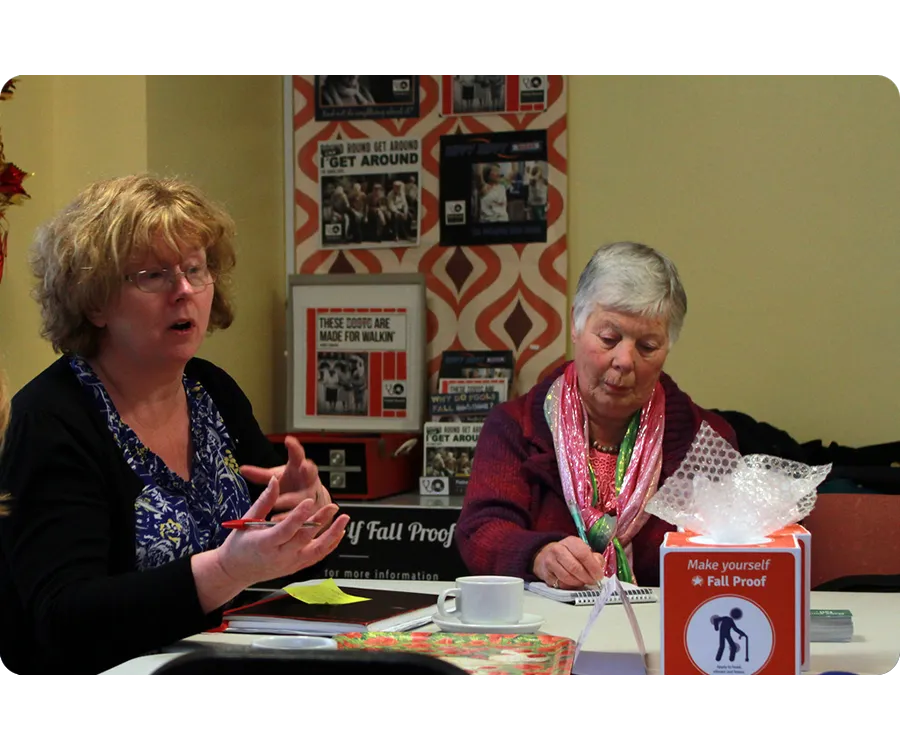
Working closely with Teignbridge District Council, the Design Council, older residents and frontline professionals, we focused on uncovering where current services worked well, and where they broke down.

Our approach included:

Listening to lived experience

We conducted interviews with older people who had experienced falls, capturing their stories through short, informal films. These first-hand accounts helped surface emotional, environmental and behavioural factors that data alone often misses.

Mapping the falls pathway

Through collaborative workshops with health, housing and social care teams, we mapped the full journey around falls prevention and response. This revealed service touchpoints, duplication, delays and critical gaps in the system.

Testing new ways to communicate

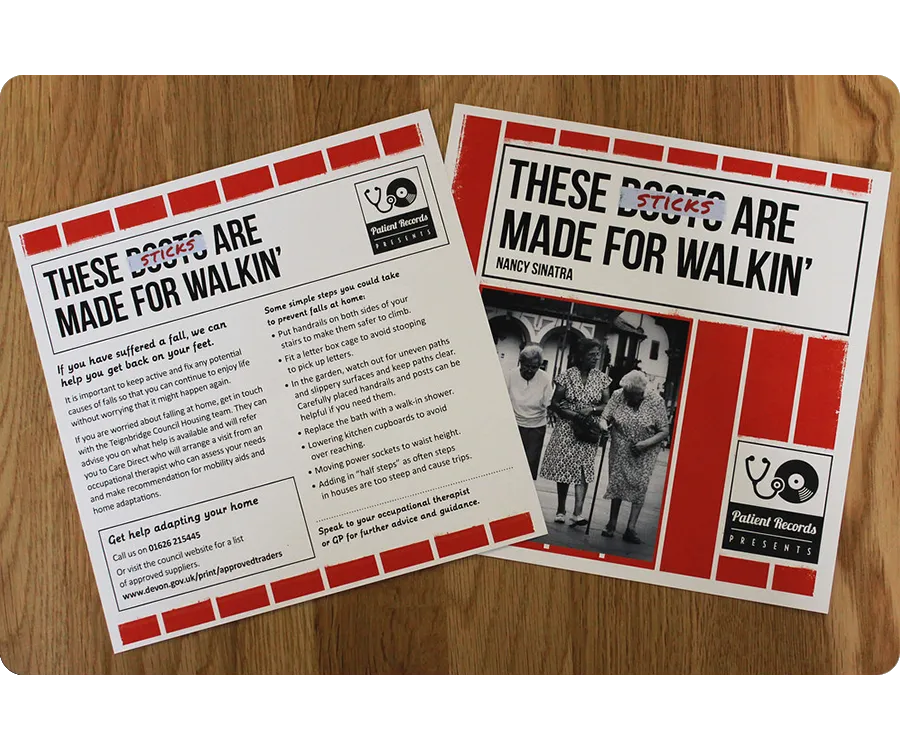
Recognising that traditional leaflets often go unseen, we prototyped bold, engaging public communication campaigns designed to start conversations and prompt action:

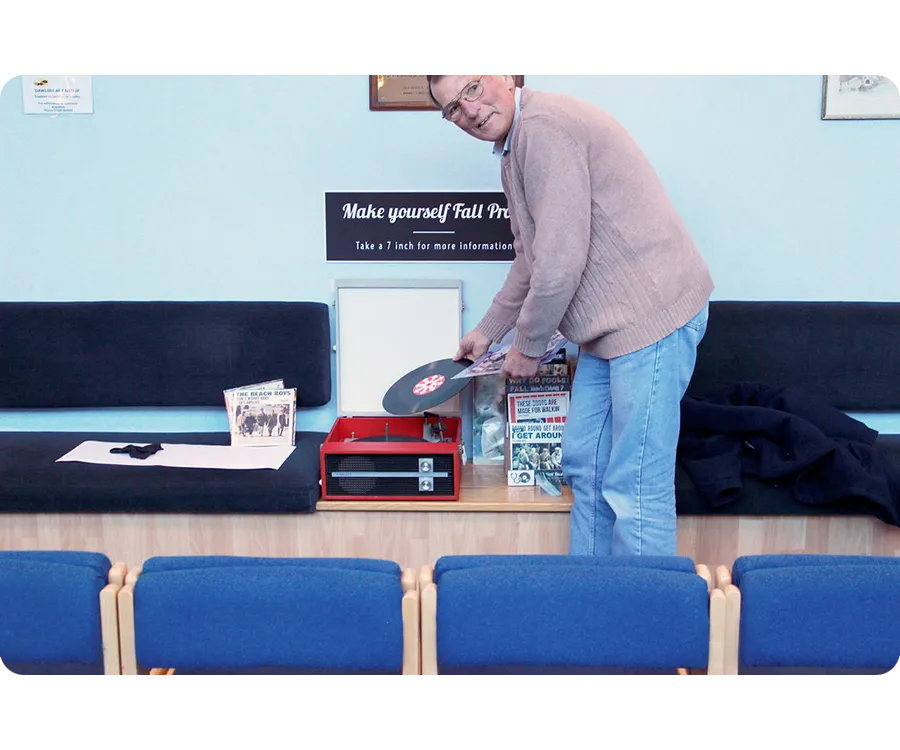
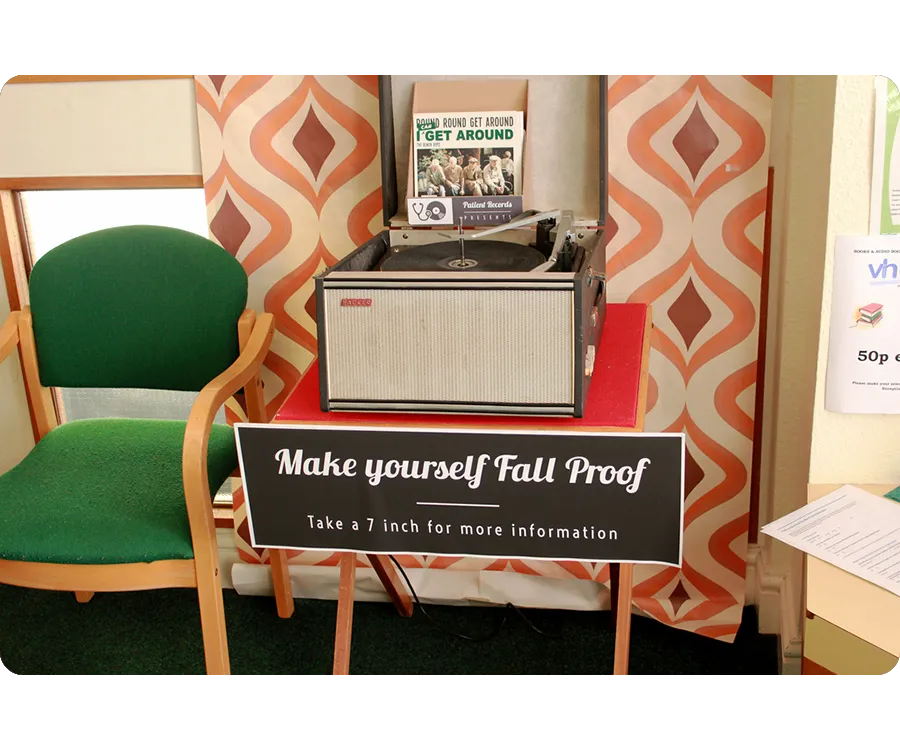
  • Sound advice: a vintage record installation using familiar 1960s music to share falls prevention messages.
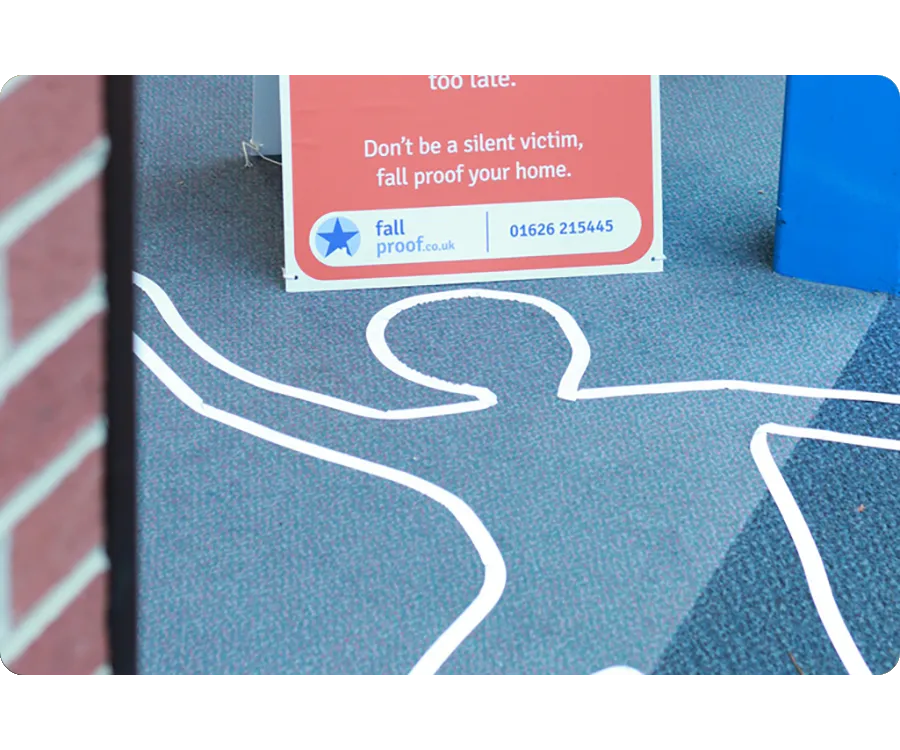
  • Fall victim: chalk “crime scene” outlines highlighting local fall statistics.
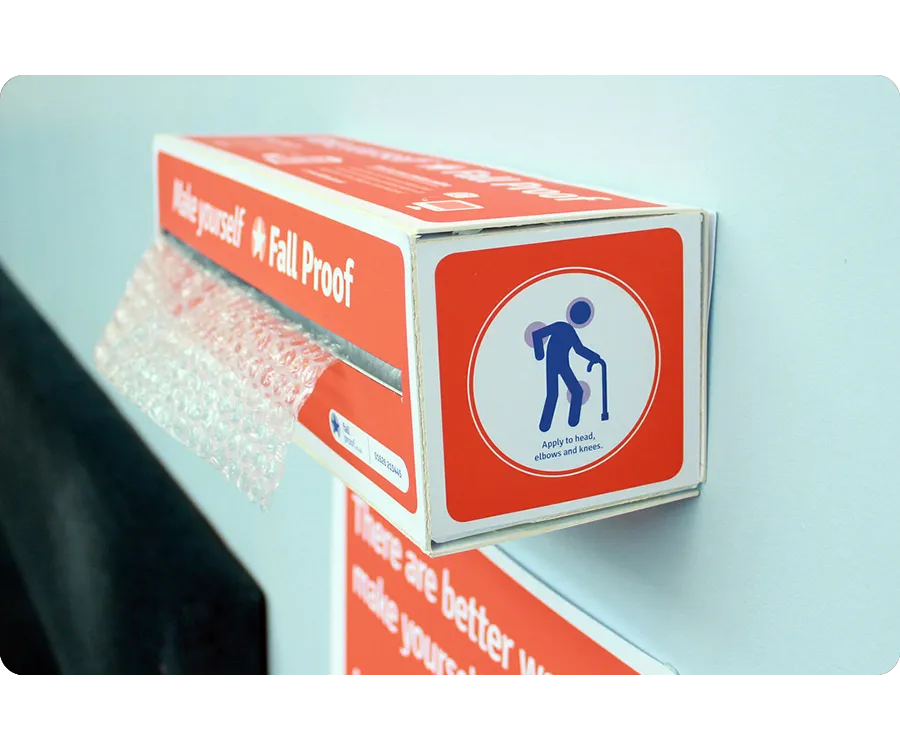
  • Fall proof: a playful campaign using bubble wrap to spark interest in home safety and link residents to free home checks.

These interventions prioritised curiosity, humour and visibility over instruction.
Our approach

Key insights

Building on research insights, we developed and tested three practical service prototypes under the Fall Proof banner.

Online photo submission

Family members could submit photos of a loved one’s home and receive tailored advice on reducing hazards.

Home assessment service

In-person assessments produced personalised reports outlining fall risks and recommended changes.

Volunteer support pack

Training and resources enabled volunteers to support falls prevention, including simple home assessment checklists.

Each prototype was designed to be low-cost, scalable and easy to integrate into existing services.

Key insights

Outcomes and impacts

The project led to meaningful change across systems, culture and practice.

This project fundamentally changed how we work, not just what we do. It strengthened our partnerships with health and social care and helped us take a more inclusive, preventative approach to falls and home safety.

Amanda Pujol, Housing Lead, Teignbridge District Council

Key outcomes included:

  • A deeper, shared understanding of falls as a systemic issue.
  • Stronger collaboration between housing, health and social care teams.
  • New ways of working rooted in prevention rather than response.
  • Design methods embedded into wider council practice.
  • Successful funding bids to continue and expand the work.

Crucially, the project shifted the conversation away from individual blame and towards collective responsibility and opportunity.

Outcomes and impacts

Designing for prevention

By applying user-centred design, creative communication and cross-sector collaboration, Teignbridge District Council, the Design Council and Made Open demonstrated how complex social challenges like falls prevention can be addressed more effectively.

The project showed that listening deeply, testing boldly and working systemically can improve safety, reduce risk and support older people to live well - at home and in their communities.

Designing for prevention

Get in touch

Would you like to save your progress?


Note: Saving as a draft means your activity will be available for you to edit in your dashboard.​

Selecting delete marks your activity as deleted in your dashboard.​

Please sign in or register

Delete my account

Selecting this option will permanently delete your account data. You will no longer have access to your account or any associated information.

If you want to request a copy of your data, please wait until you receive your data before selecting this option.

Connect with __XXX__

Search Made Open

X hours given for:
Title

Invite to circle

Share the magic link:

Anyone who follows this link will auto-magically join your circle!

Or share on WhatsApp

Share the auto-magic link in a WhatsApp group.

Cookies on Made Open

We use cookies to give you the best online experience.

Select 'Accept all' to agree to all cookies.

Some cookies are essential. Others can be controlled in your cookie preferences.